
Stryiskyi Park in Lviv: History, Walking Route and Things to See
Stryiskyi Park in Lviv covers more than 50 hectares and combines historic avenues, a pond, the Jan Kiliński monument and the site... Read More
 Author: Leo Apartment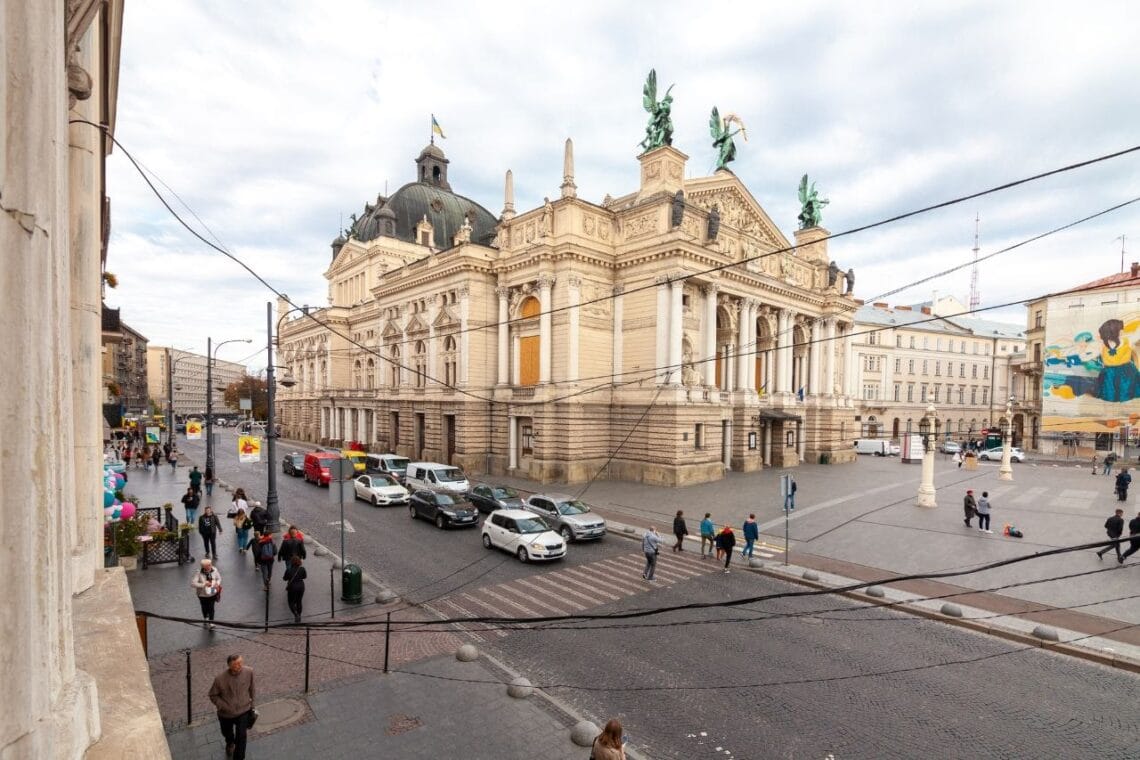
Lviv Opera House is one of the city’s most recognizable buildings and the main architectural landmark of Svobody Avenue. The monumental theatre was built in 1897–1900 to a design by architect Zygmunt Gorgolewski. Today it is home to Lviv National Opera and remains one of the city’s most important architectural and cultural landmarks.
It is worth seeing even if you are not attending a performance. The façade, sculptures, grand staircase, foyer, Mirror Hall and auditorium form one of the most distinctive historic interiors in Lviv.
Lviv Opera House is located at 28 Svobody Avenue, in the very centre of the city. The building closes the perspective of the central avenue and forms a key part of Lviv’s historic urban ensemble.
The location is particularly convenient for visitors. From the theatre, you can walk to Market Square, the Armenian Quarter, Doroshenka Street and many other central attractions.
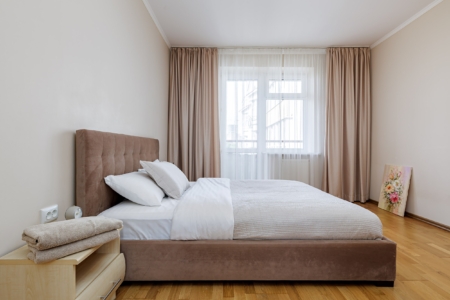
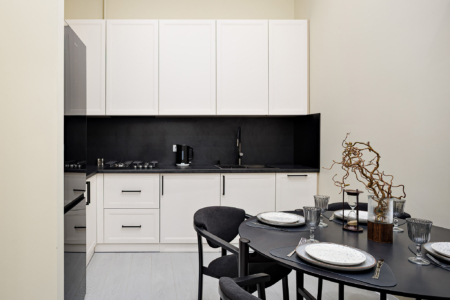
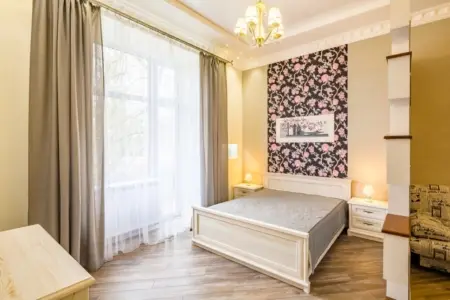
If you want to stay directly beside the theatre, see the Leo Apartment on Svobody Avenue with a view of Lviv Opera House and the fountain in front of it.
At the end of the 19th century, Lviv was developing rapidly and needed a modern, representative theatre building. On 12 July 1895, the city magistrate announced a competition for the design of a new theatre.
The winning project was created by architect Zygmunt Gorgolewski. Construction took place from 1897 to 1900. The engineers had to take into account the difficult ground conditions associated with the theatre’s location in the Poltva valley.
The theatre was ceremonially opened on 4 October 1900. It was initially known as the Grand City Theatre. Its name and institutional status changed during the following historical periods of Lviv.
A major reconstruction took place between 1978 and 1984. Among other works, the restoration included elements of the theatre’s artistic decoration and its historic stage curtain.
Lviv Opera House represents Historicism with strong influences of the so-called Vienna Neo-Renaissance. Its symmetrical composition and monumental scale reflect European academic architecture of the late 19th century.
Horizontal cornices divide the façade into several levels. The lower tier is emphasized by rustication and three entrance portals. Above them are arched loggias with Corinthian columns.
The upper part of the building is crowned by an elaborate sculptural composition that has become one of the most recognizable elements of Lviv’s skyline. The façades are enriched with sculptures, allegorical figures, reliefs and decorative details.
The theatre was built of brick and stone, with metal structural elements. Its elongated rectangular plan is organized around the main auditorium and stage space.
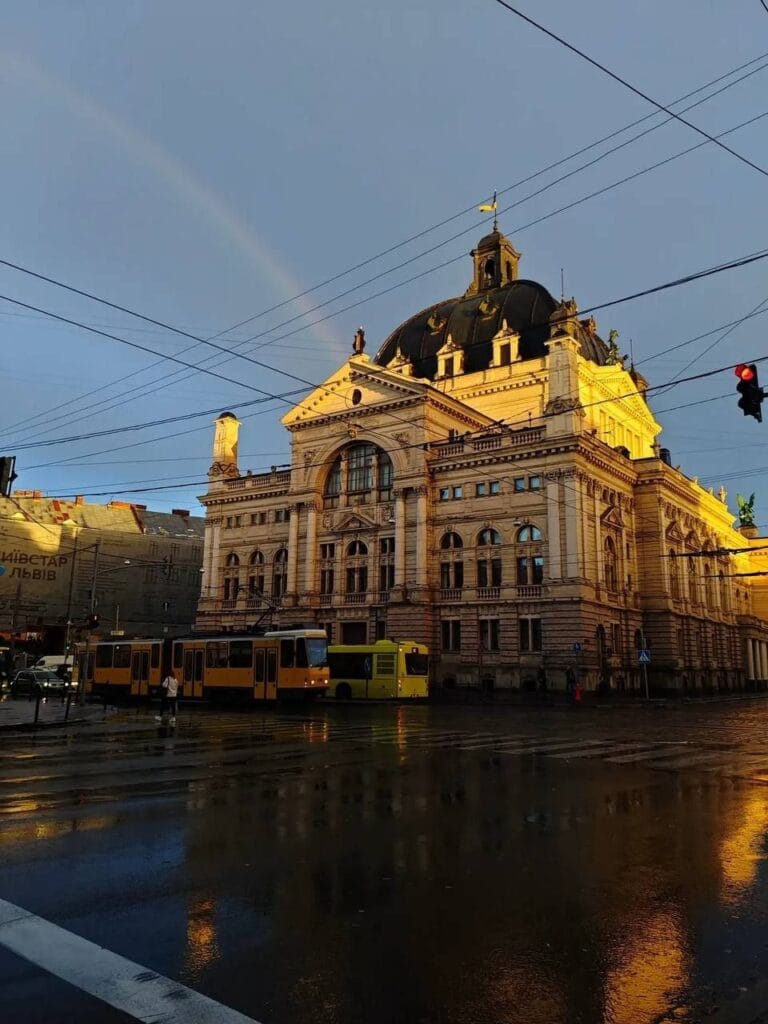
Even without attending a performance, it is worth stopping in front of the main façade. Its sculptural decoration creates an almost theatrical scene against Svobody Avenue.
The interior is just as impressive as the exterior. The grand staircase leads to spacious rooms decorated with painting, sculpture, mirrors and architectural ornament.
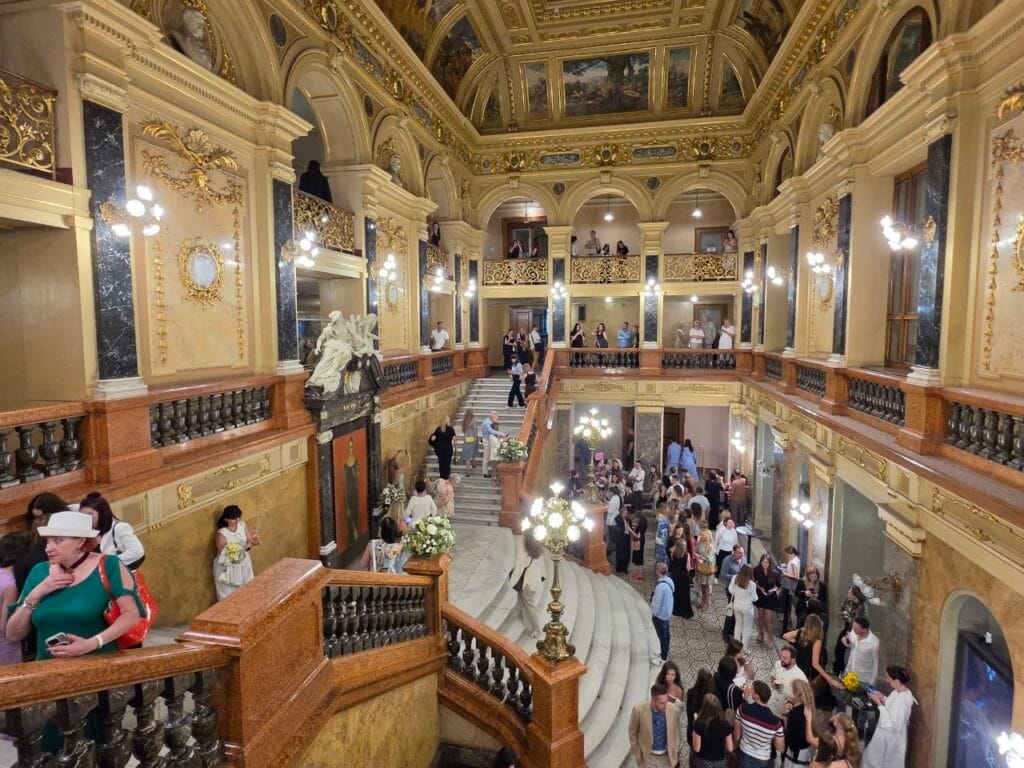
The foyer, also known as the Mirror Hall, is one of the building’s most distinctive spaces. Large mirrors, painted compositions and decorative sculpture form a unified interior.
The auditorium is the central space of the theatre. In 2002, a bronze sculpture of Solomiya Krushelnytska, the renowned Ukrainian opera singer and patron of the theatre, was installed in its centre.
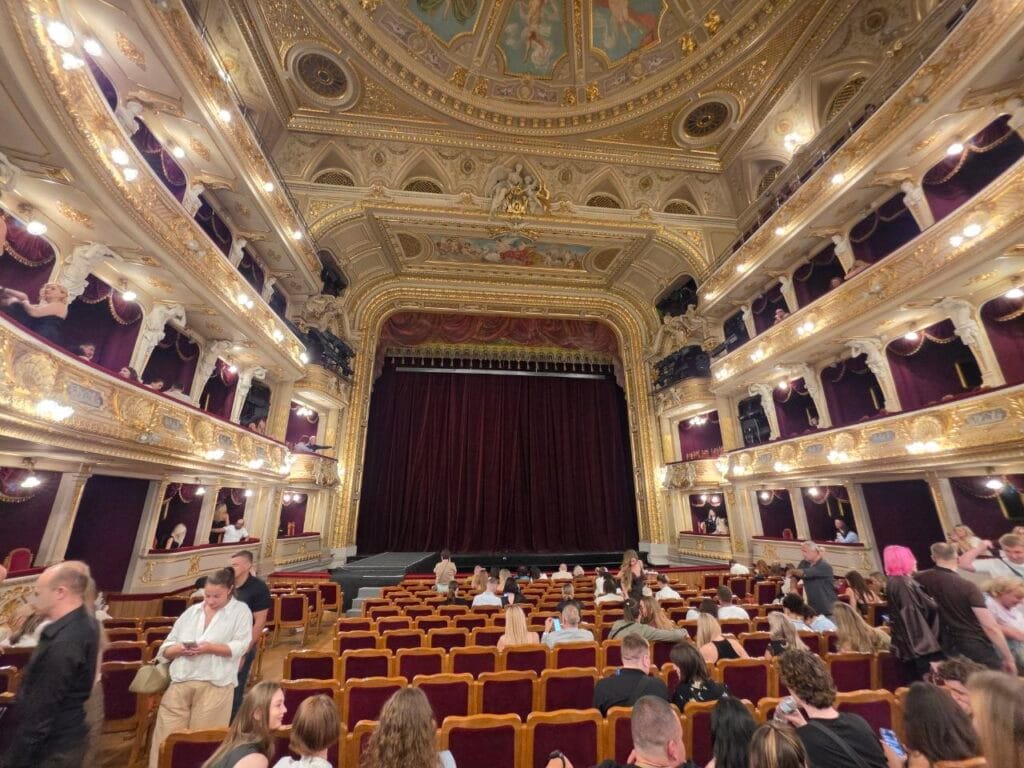
One of the most valuable works associated with Lviv Opera House is the ceremonial stage curtain Parnassus by Henryk Siemiradzki.
The artist received the commission before the theatre opened, but the work was not ready for the inauguration in 1900. The curtain arrived in Lviv on 16 October 1900 and was first presented to the public on 13 January 1901.
Since 1967, Siemiradzki’s painting has belonged to the Lviv Art Gallery. Today the curtain is carefully preserved and is displayed to audiences during premieres and major ceremonies.
The theatre now bears the name of Solomiya Krushelnytska, one of Ukraine’s most famous opera singers. Her name is closely connected with the history of Ukrainian musical culture.
A bronze sculpture of the singer was installed in the centre of the auditorium in 2002. It is one of the details worth seeing during a visit inside the theatre.
The theatre stands in an ideal location for beginning or ending a walking tour of central Lviv. Svobody Avenue stretches in front of the building, while historic streets, squares, cafés and restaurants are nearby.
From here, it is easy to continue towards Market Square, the Armenian Quarter, Bernardine Monastery and other central landmarks.
The open space in front of the theatre is one of Lviv’s most recognizable city views. The fountain creates a broad foreground and gives visitors a clear perspective of the Opera House from Svobody Avenue.
It is particularly pleasant during an evening walk. If the view of the theatre is an important part of your stay, you can choose accommodation directly on the avenue.
For travellers who want to stay in the heart of the city, Leo Apartment offers an apartment on Svobody Avenue with a view of Lviv Opera House and the fountain in front of it.
This is especially convenient for a short city break: one of Lviv’s main landmarks is right nearby, while many central walking routes start at your doorstep. Check the apartment and book your stay for your travel dates.
For the current programme, ticket prices and visiting conditions, check the official Lviv National Opera website. The theatre address is 28 Svobody Avenue.
The official theatre box office operates according to its own schedule, which can change. Before your visit, check the current information on the theatre’s official website.
The official website also provides information about performances, excursion tickets and theatre contacts.
The easiest way to visit the Opera House is as part of a walking route through central Lviv. Start on Svobody Avenue, see the theatre, and then continue towards Market Square and the historic quarters.
If you are attending an evening performance, staying near Svobody Avenue means you do not need to spend time travelling across the city. In that case, an apartment with a view of the Opera House is particularly convenient.
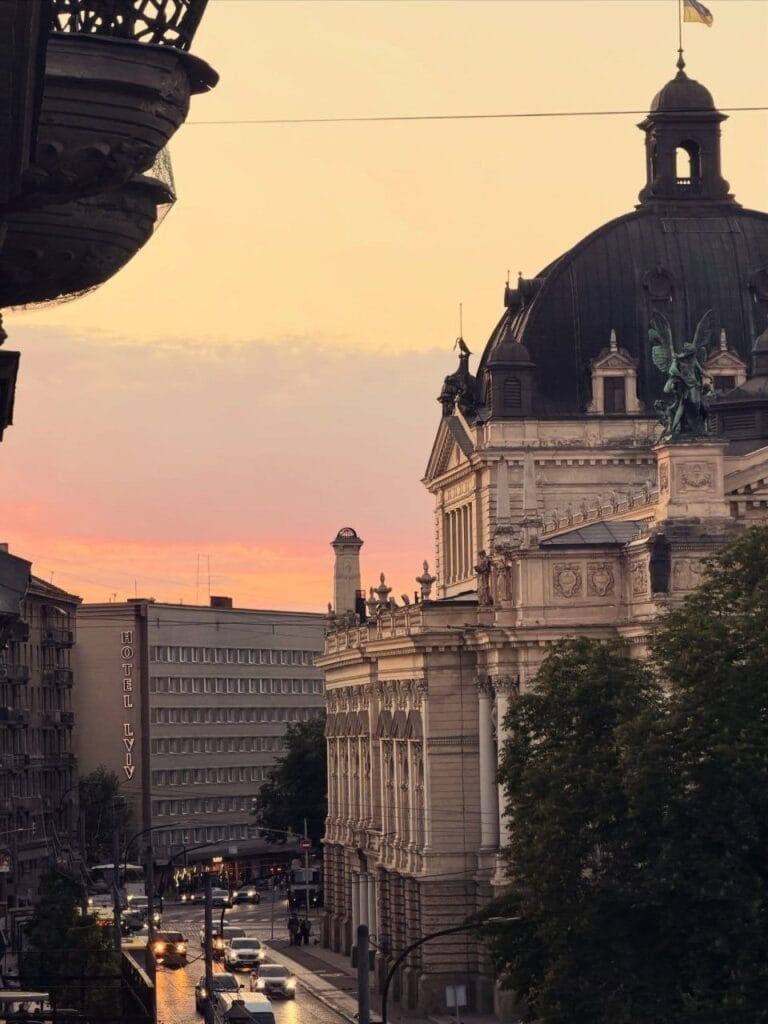
Lviv Opera House is at once a functioning theatre, an architectural landmark and one of the symbols of the city. Its history began at the end of the 19th century, while the monumental building still defines the character of central Lviv.
If you are staying in Lviv for several days, try to see the Opera House both from outside and, if the theatre programme allows, from inside. For accommodation directly beside the theatre, see the Leo Apartment on Svobody Avenue with a view of the Opera House and fountain.
It is located in central Lviv at 28 Svobody Avenue.
The building was constructed in 1897–1900 according to the design of architect Zygmunt Gorgolewski. It opened ceremonially on 4 October 1900.
The building represents Historicism with strong influences of Vienna Neo-Renaissance.
The grand staircase, foyer and Mirror Hall, auditorium, painted decoration, sculptures and the bronze sculpture of Solomiya Krushelnytska.
Conditions for interior visits depend on the theatre’s current programme. Check the official Lviv National Opera website before visiting.
Leo Apartment offers an apartment on Svobody Avenue with a view of Lviv Opera House and the fountain in front of it. Check the apartment and book your stay.
The Bernardine Monastery in Lviv is now the Greek Catholic Church of St Andrew on Soborna Square. A church of 1600–1630, defensive... Read More

Єдина проблема це парковка в центрі! в усьому іншому просто прекрасна квартира. Швидкий «безконтактний» чек-ін,…
Дуже рекомендую це помешкання. Розташування шикарне. Цікавий квест з під'їздом дуже піднімає настрій. Відчуття львівського…
Дуже гарна, сучасна квартира. Нам все сподобалось!




Join The Discussion