
Garrison Church in Lviv: History, Underground and What to See
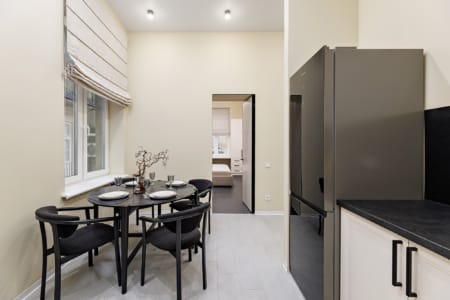
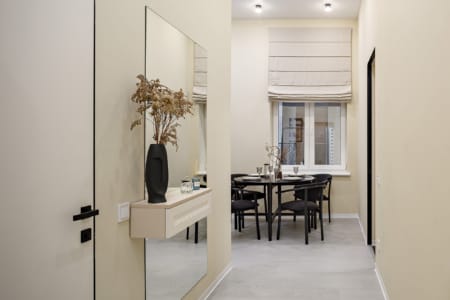
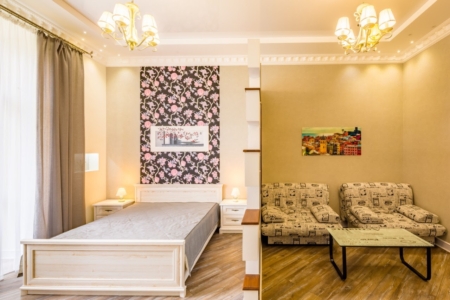
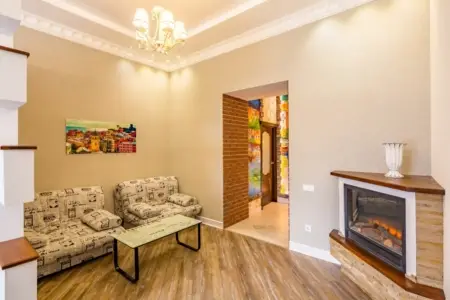
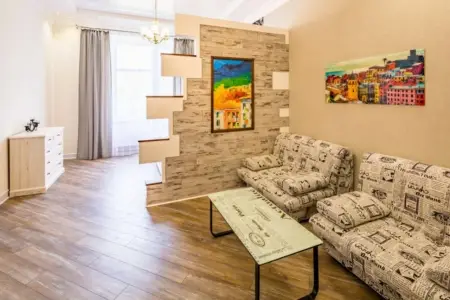
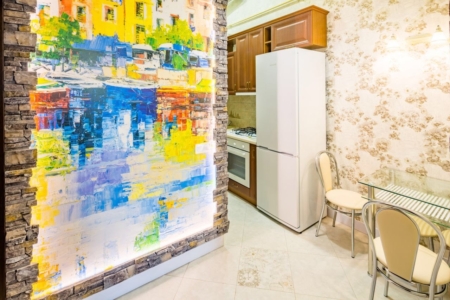
 Leo Apartment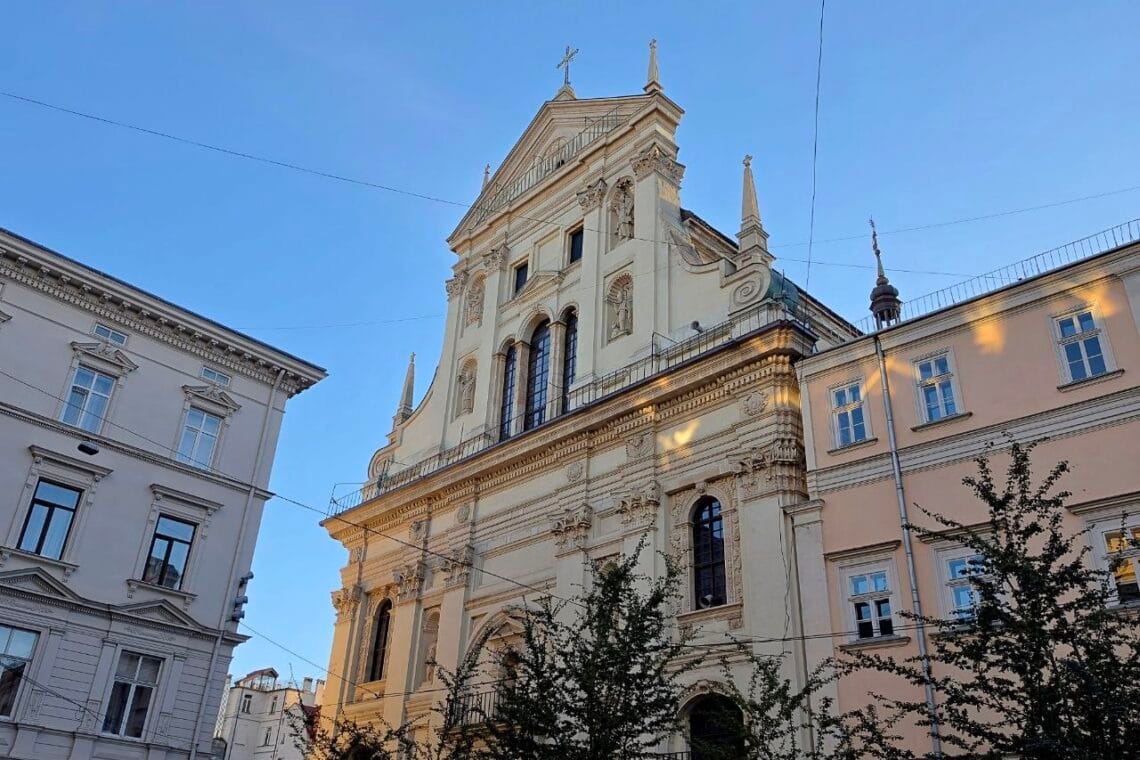
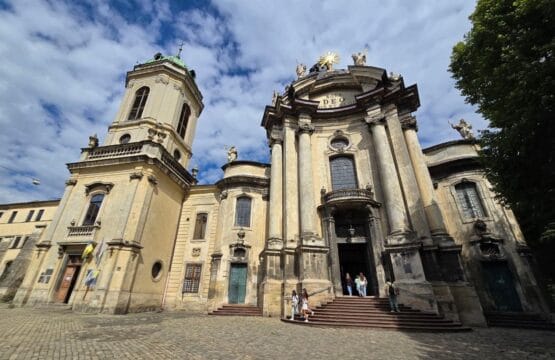
The Garrison Church in Lviv is the former Jesuit Church and the first Baroque church in the city. Its foundation stone was laid on 31 July 1610. Today military chaplains serve here, and the city says farewell to fallen defenders of Ukraine.
From the outside, the church looks rather restrained. Step inside, however, and you will find frescoes that create the illusion of space where there is none. And beneath the floor lies another city: an underground museum with the remains of medieval Lviv.
Where Is the Garrison Church?
The address is 11 Teatralna Street, right in the centre between Rynok Square and Svobody Avenue. That makes it easy to include in any walk around the Old Town.
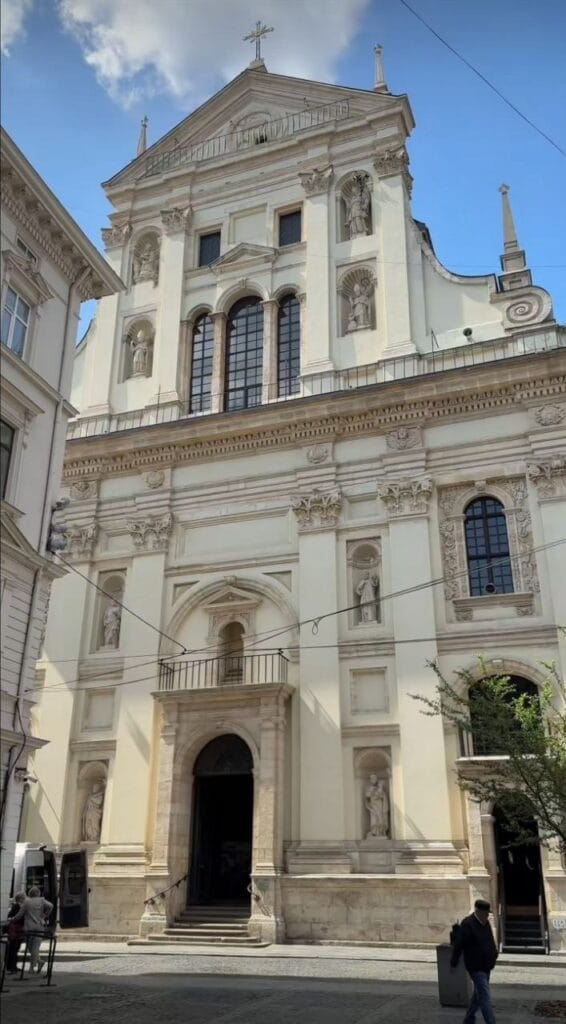
A few nearby sights you can reach in minutes:
- Rynok Square and the City Hall;
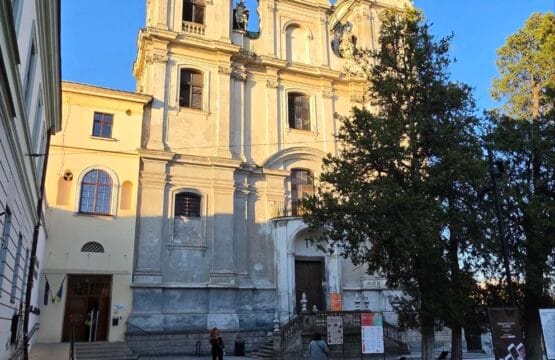
- the Transfiguration Church on Krakivska Street;
- the Lviv Opera House at the top of Svobody Avenue.
History: from Jesuit Church to Garrison Church
The Jesuits arrived in Lviv at the end of the 16th century. Construction began in 1610, and from 1618 the Italian architect Giacomo Briano led the works. The church was consecrated in 1630.
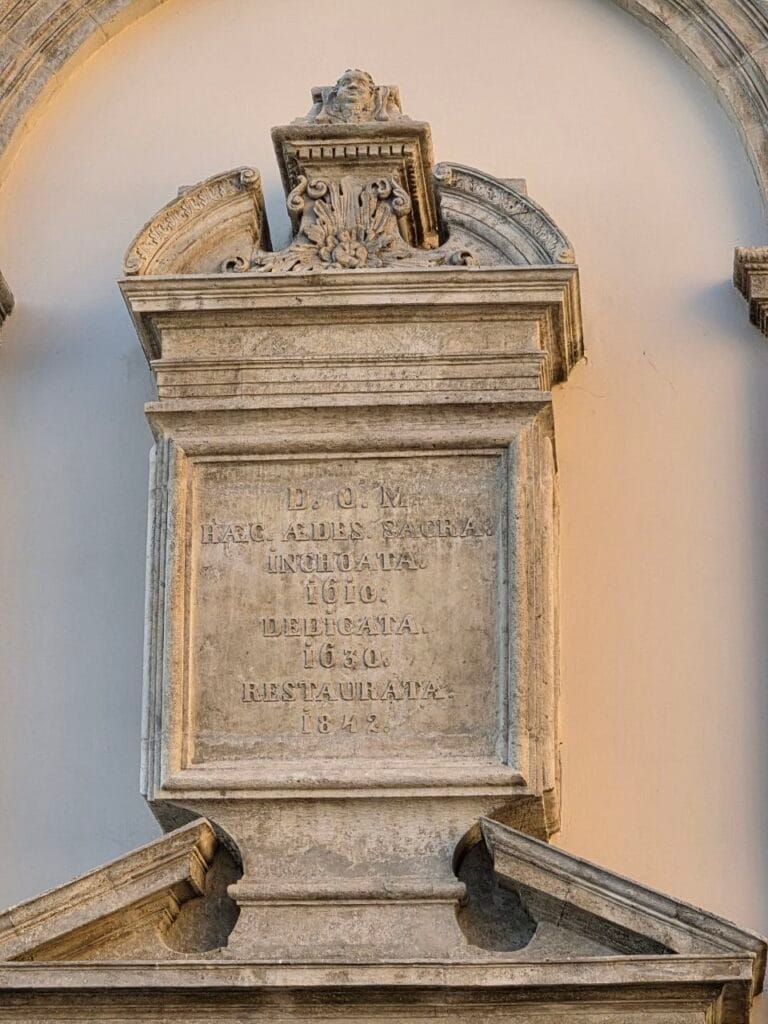
Its model was the Church of the Gesù in Rome, the mother church of the order. That is why the building is considered the first Baroque structure in Lviv.
Next to it stood the Jesuit College. Among its famous students were Bohdan Khmelnytsky and Prince Jeremi Wiśniowiecki. The complex also set other records: it once had the tallest tower in the city, and the college ran an astronomical observatory.
Austrians, a Soviet Book Depository and a Comeback
- 1773. Pope Clement XIV dissolved the Jesuit order, and the church became a garrison church for the Austrian army.
- 19th century. The Jesuits returned, left and came back to Lviv several times.
- 1946. The order finally left the city, taking the most valuable relics with them.
- Soviet era. The church was turned into a book depository of the Stefanyk Library, holding around three million books.
- 2011. The church was consecrated again and received its current name, the Garrison Church of Saints Peter and Paul.
The Interior and the Eckstein Frescoes
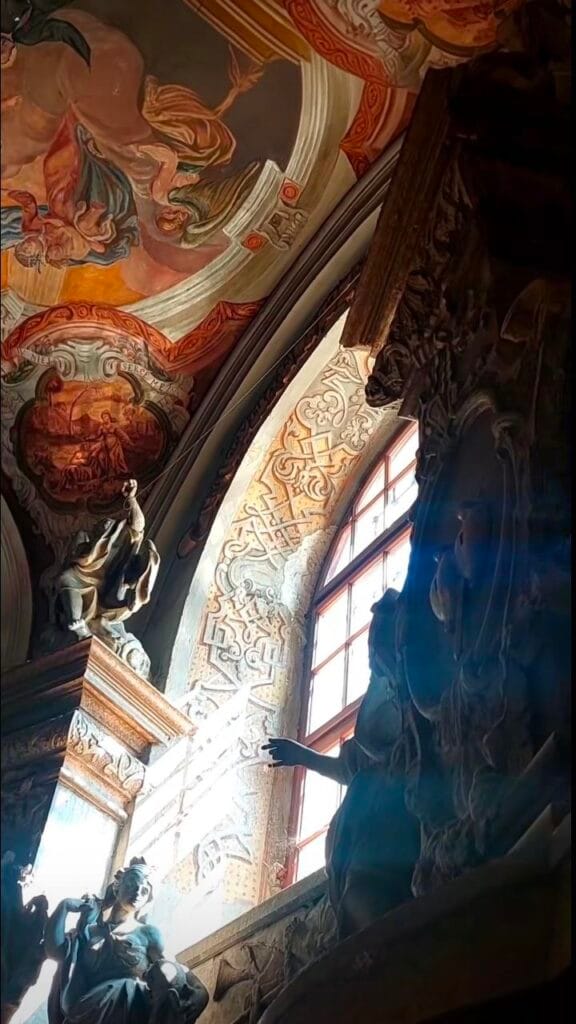
The main reason to go inside is the paintings by the Moravian masters Franz and Sebastian Eckstein. They worked here in the 1740s and turned a calm early Baroque interior into real theatre.
Look up at the vaults. The painted columns, cornices and domes seem three-dimensional, although the ceiling is flat. The effect works best from the centre of the nave, so stand there and raise your eyes slowly.
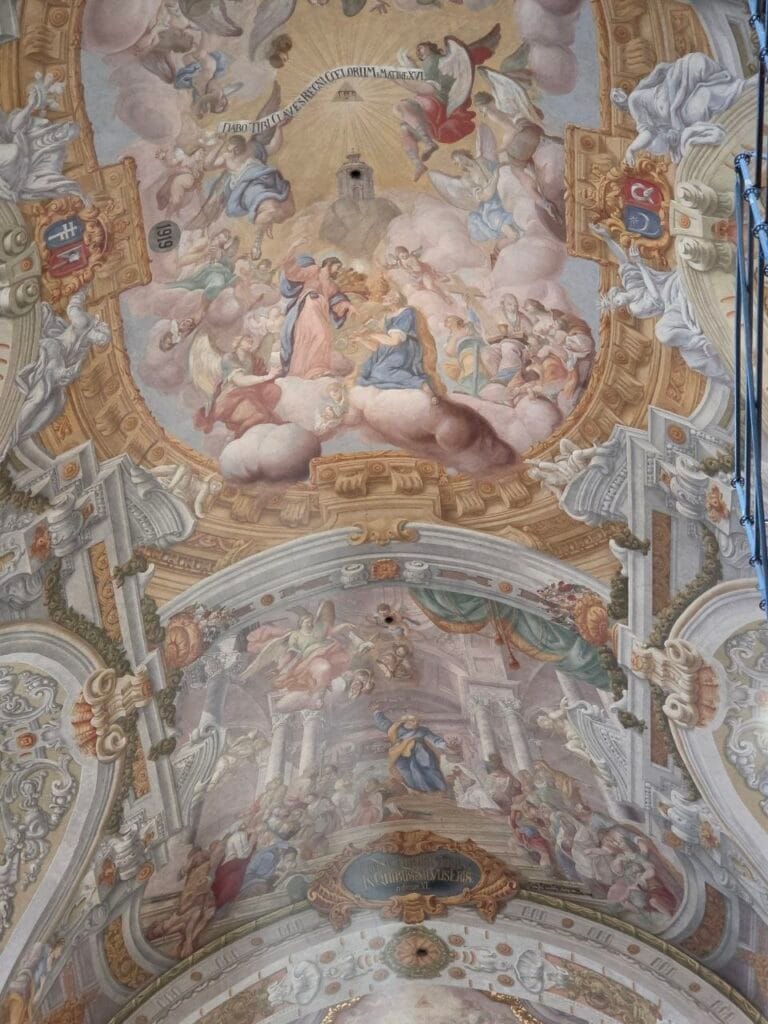
Keep in mind that decades as a Soviet book depository left their mark. Some paintings are still waiting for restoration. As a result, you will see faded sections next to bright fragments, and that is also part of the church’s story.
The Garrison Church Underground
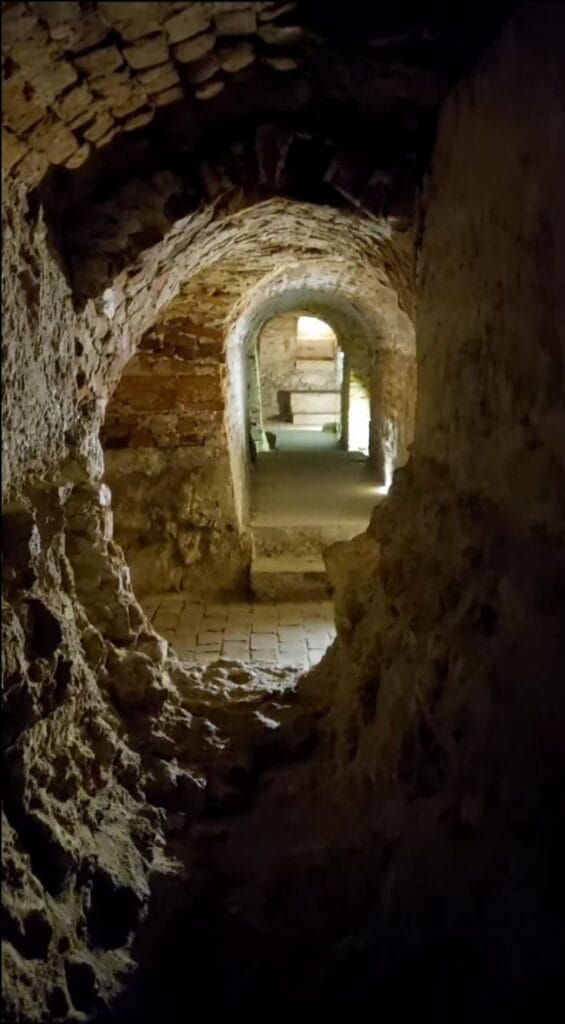
Beneath the church there is a museum that shows Lviv through the centuries. According to the official Lviv tourism portal, it is one of the most interesting places in the Old Town.
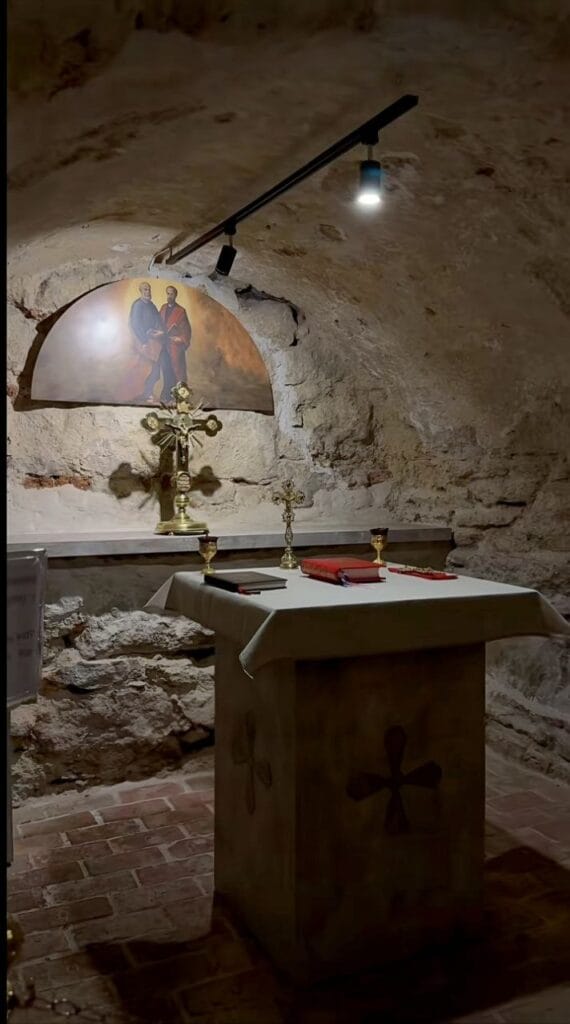
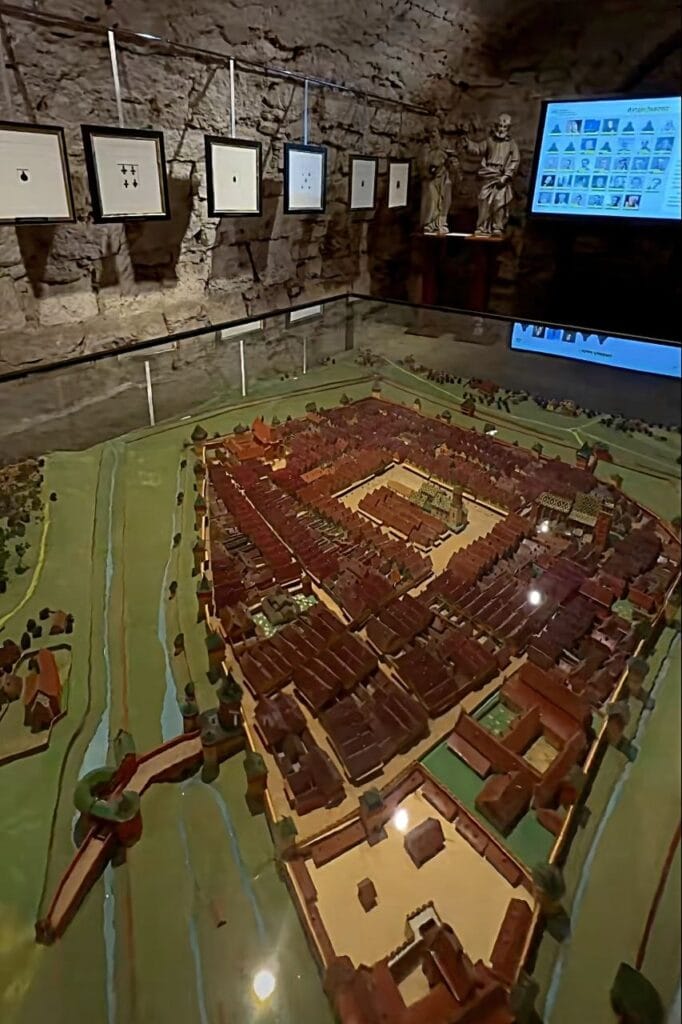
What you will see there:
- models of Lviv from the princely era and from the 16th and 18th centuries, which make it easy to see how the city changed;
- remains of a 15th-century city school, as the Jesuit complex was built over several medieval houses;
- masonry from the princely period and fragments of old walls;
- the burial place of Hetman Jabłonowski and his wife.
The underground also serves as a shelter with a generator, so a tour does not always stop during an air-raid alert. Some passages are low and narrow, though, so wear comfortable shoes.
The Garrison Church Today
Today it is an active Ukrainian Greek Catholic church. Military chaplains serve here, and people come to pray for those who are fighting.
This is also where Lviv says goodbye to its fallen defenders. If a funeral is taking place during your visit, please wait at a distance, do not take photos and do not enter until the ceremony is over. For many families, it is the hardest day of their lives.
Tips for Visitors
- Dress code. Cover your shoulders and knees: this is an active church, not a museum.
- Timing. Weekday afternoons are the calmest. Tours are usually not held during services.
- Photos. Do not use flash, and do not photograph people who are praying.
- Underground. Tickets are sold at the entrance, and it is best to check the opening hours in advance.
- Your route. Combine the church with the Dominican Cathedral and the Bernardine Monastery for a half-day tour of Lviv’s Baroque churches.
Where to Stay near the Garrison Church
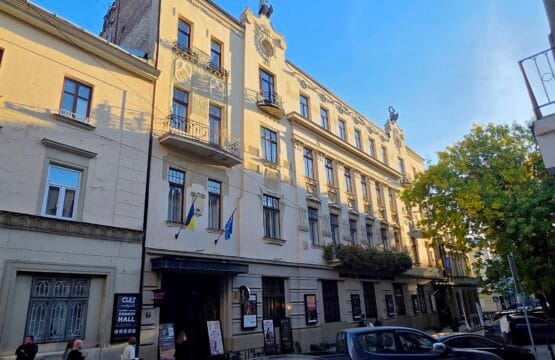
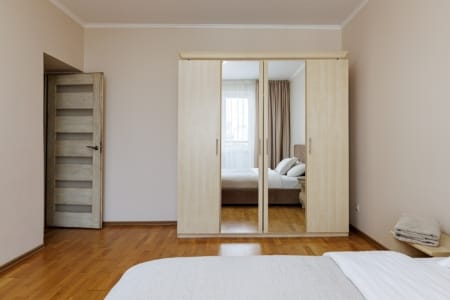
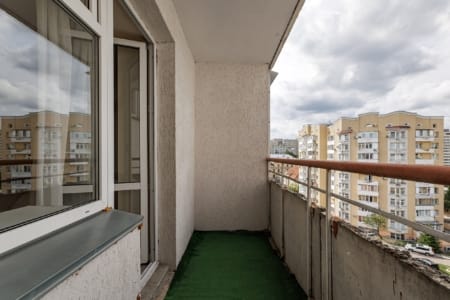
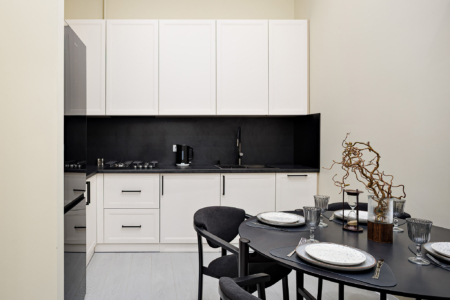
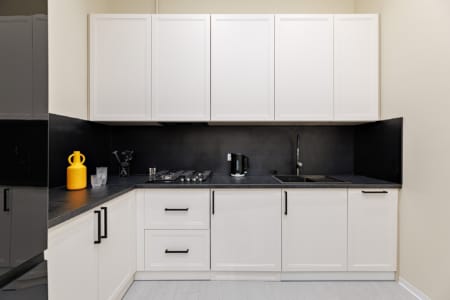
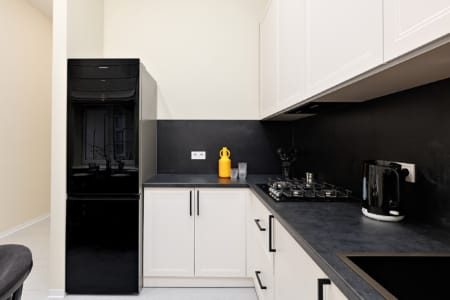
If you are spending a few days in the centre, it is convenient to stay within walking distance of the main sights. For example, our apartment on Svobody Avenue is a few minutes from the church and overlooks the Opera House.
See more options in our apartments in Lviv.
Conclusion
The Garrison Church brings together four centuries of history: a Jesuit college, an Austrian garrison, a Soviet book depository and today’s war. It looks modest outside, amazes with its frescoes inside and reveals medieval Lviv underground.
Planning a walk around the Old Town? Book a short-term apartment in Lviv close to the centre: online, directly, with no intermediaries and no commission.
Garrison Church in Lviv: FAQ
Where is the Garrison Church in Lviv?
At 11 Teatralna Street, between Rynok Square and Svobody Avenue.
Why is it called the Jesuit Church?
It was built by the Jesuit order in 1610–1630. It received its current name in 2011.
Who painted the frescoes?
The Moravian masters Franz and Sebastian Eckstein, in the 1740s.
Can I visit the underground?
Yes, there is a museum with models of old Lviv. Tickets are sold at the entrance.
Can I visit during a service?
Yes, but without tours or photos. If a soldier’s funeral is taking place, it is better to wait until it ends.
How much time do I need?
About 20–30 minutes for the church and another 40–60 minutes for the underground.
















Join the discussion