Stryiskyi Park in Lviv is one of the city’s best-known green spaces and an important example of historic landscape design. Covering more than 50 hectares, it combines wooded slopes, walking paths, a pond and places connected with Lviv’s development in the late 19th century.
Today, it is a pleasant place for a slower walk away from the busiest streets of the Old Town. At the same time, its history is remarkable: the upper terrace hosted the major Regional Exhibition of 1894, which attracted more than one million visitors.
Where Is Stryiskyi Park in Lviv?
Stryiskyi Park lies in southern Lviv, between Stryiska Street, Ivana Franka Street, Samchuka Street and Kozelnytska Street. One well-known entrance is on Parkova Street.
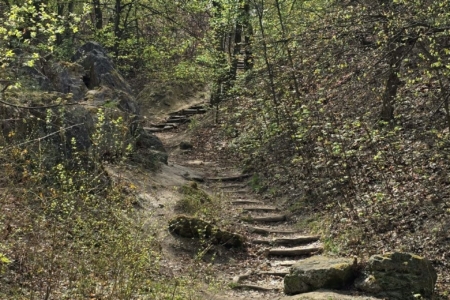
The park occupies part of the Lviv Heights, so the terrain is not completely flat. The lower section has a more informal landscape character, while paths gradually lead uphill towards the upper terrace. For accommodation, see Leo Apartment in Lviv.
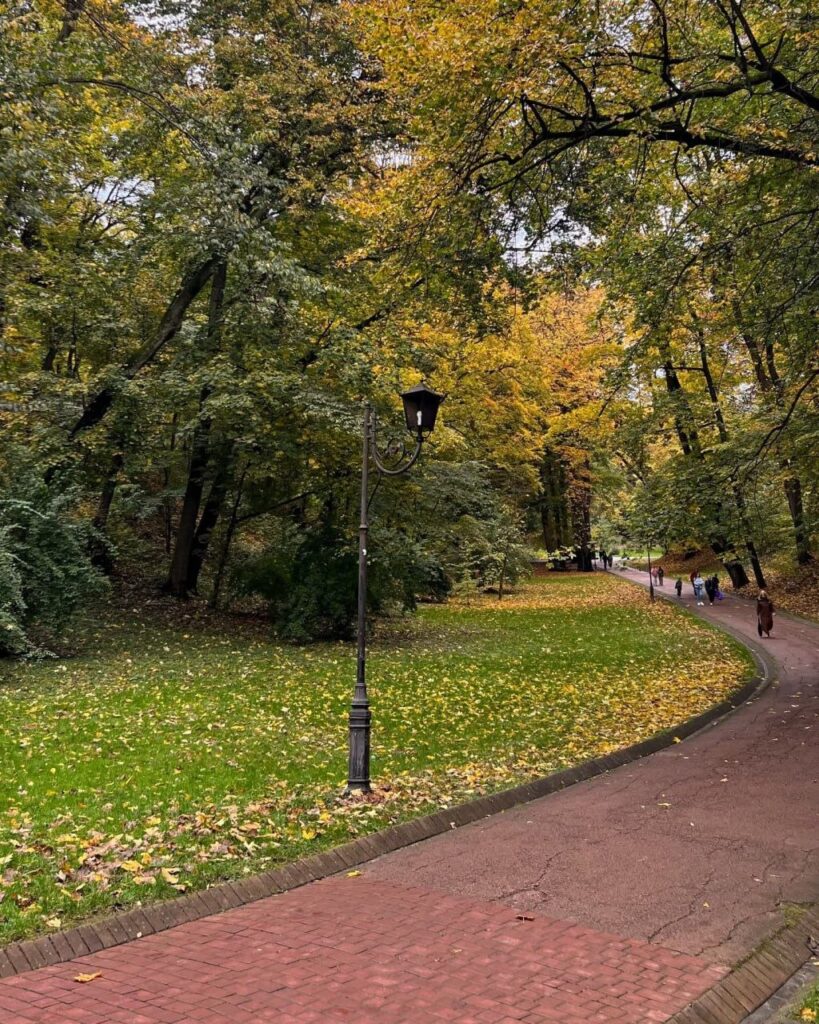
A winding path in Stryiskyi Park in autumn.
The History of Stryiskyi Park
The modern park began taking shape in the second half of the 19th century on the southern outskirts of Lviv. Work started in the 1870s, while Arnold Röhring, the city’s landscape specialist, played an important role in its planning.
His design included avenues, paths and carefully arranged plantings. Historical sources state that around 40,000 trees were planted. The lower terrace followed a picturesque landscape-park approach, while the upper terrace received a more formal layout connected with major public events.
The 1894 Regional Exhibition
The most important event in the park’s history was the Regional Exhibition of 1894. The upper terrace was transformed into a large exhibition complex with more than one hundred pavilions.
Well-known Lviv architects, including Julian Zachariewicz, Juliusz Hochberger and Zygmunt Gorgolewski, contributed to the exhibition architecture. The event presented economic, agricultural, industrial and cultural achievements of Galicia.
The exhibition lasted around six months and attracted more than 1.15 million visitors. Therefore, Stryiskyi Park is closely connected with Lviv’s modernization at the end of the 19th century.
What to See in Stryiskyi Park
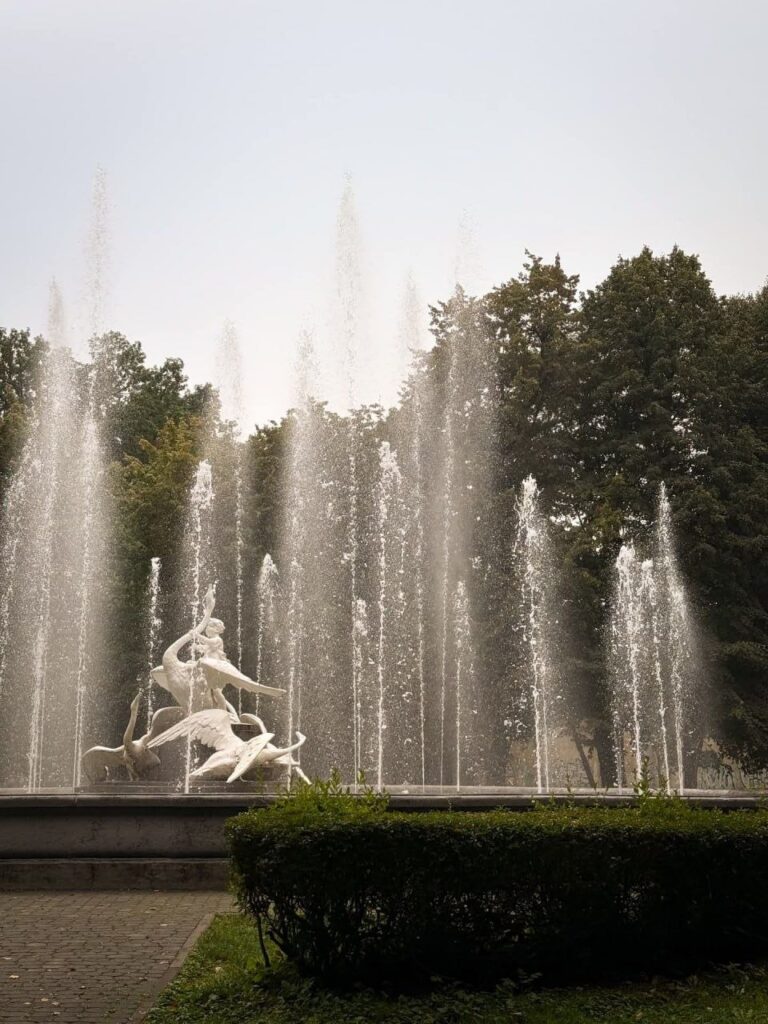
The fountain with a swan sculpture.
The Upper Terrace
The upper terrace is the park’s most historically significant area. It hosted the main exhibition grounds in 1894. Although most of the original buildings have disappeared, the spatial layout still helps visitors understand the scale of the exhibition.
The Pond and Landscape Paths
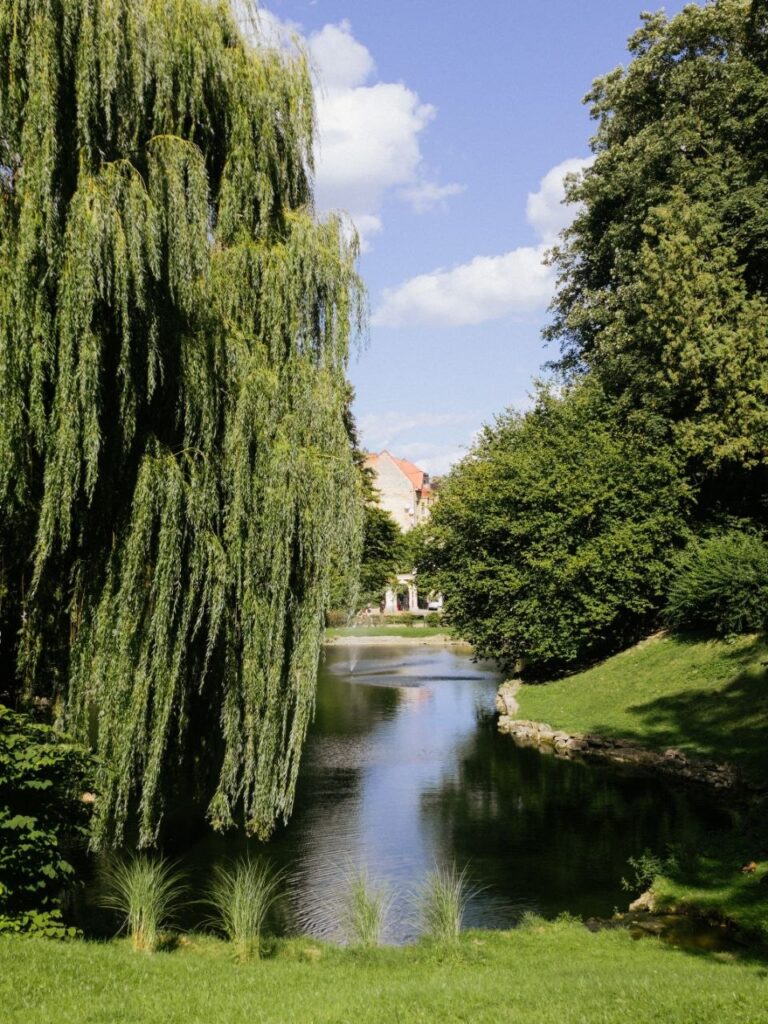
The pond area is one of the most pleasant places for a quiet walk. Water, mature trees, slopes and winding paths create the characteristic landscape of Stryiskyi Park.
The pond and a weeping willow.
The irregular layout of many paths is not accidental. It reflects the landscape-design principles used when the park was developed in the 19th century.
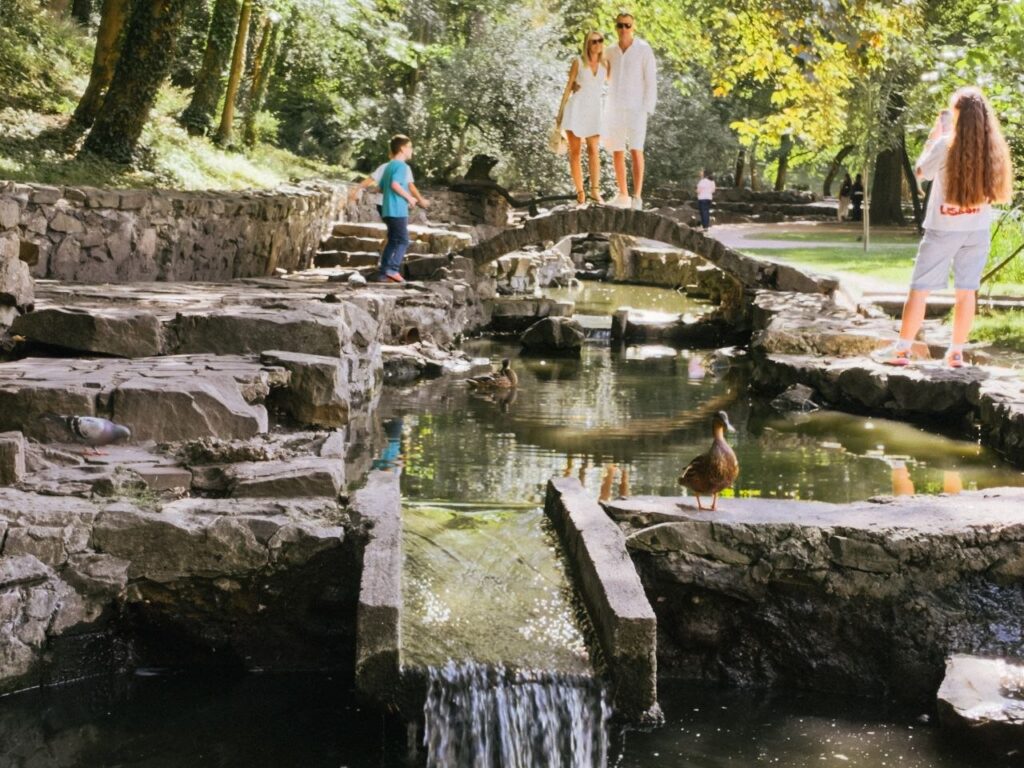
A stone footbridge over the stream.
The Jan Kiliński Monument
The lower terrace is home to the monument to Jan Kiliński by sculptor Julian Markowski. It was unveiled in 1895. For some time afterwards, the park was also known as Kiliński Park.
Trees and Plant Life
The park contains maple, chestnut, alder, birch, beech, oak, plane, acacia, linden and pine trees, among others. The variety of vegetation and the hilly terrain give the park a different character in every season.
Stryiskyi Park in Different Seasons
Spring brings fresh greenery, summer offers shaded paths, and autumn turns the trees into colourful landscapes. Autumn is especially attractive for photography.
In winter, the park becomes quieter and snow emphasizes the terrain, paths and mature trees. After rain, some slopes and paths can be slippery.
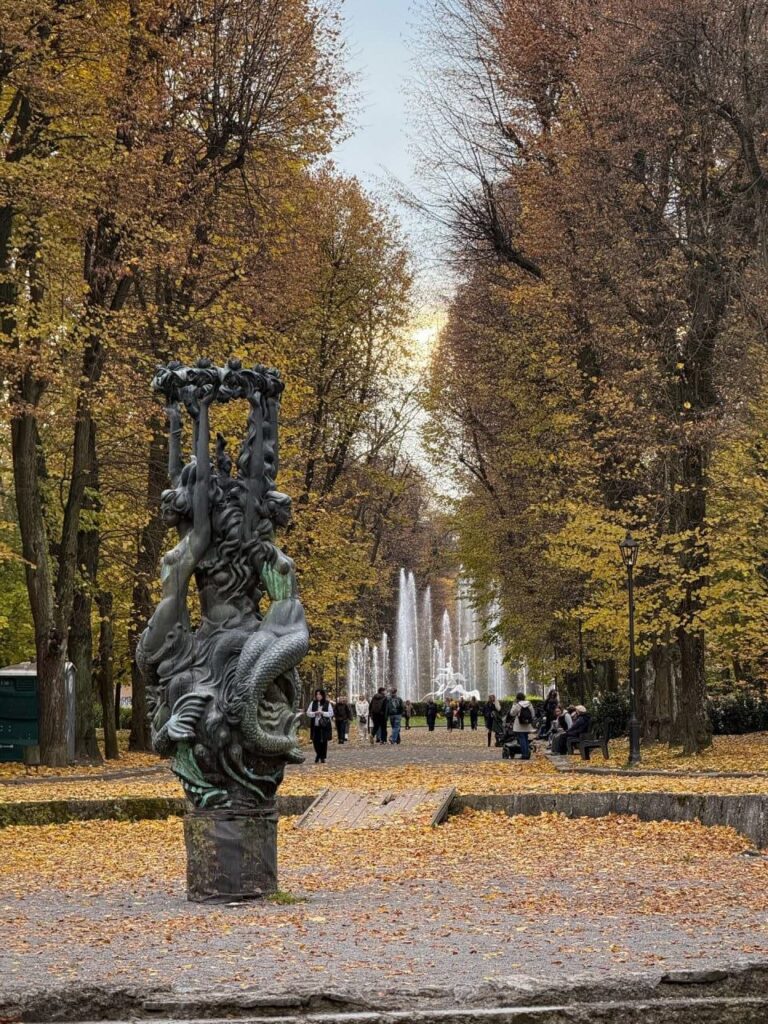
An autumn avenue in Stryiskyi Park.
Interesting Facts About Stryiskyi Park
The park covers more than 50 hectares.
Its landscape planning is associated with Arnold Röhring.
The upper terrace hosted the main part of the 1894 Regional Exhibition.
The exhibition attracted more than 1.15 million visitors.
The Jan Kiliński monument was unveiled in 1895.
A children’s narrow-gauge railway was established in the park during the Soviet period.
The area around the park is connected with the early history of football in Lviv.
How Much Time Do You Need?
For a first visit, allow around 1.5–2 hours for a relaxed walk. This is enough to explore the main paths, pond, upper terrace and Jan Kiliński monument.
If you want to take photographs, relax or combine the park with other attractions, allow additional time. Afterwards, you can return to a comfortable Leo Apartment in Lviv.
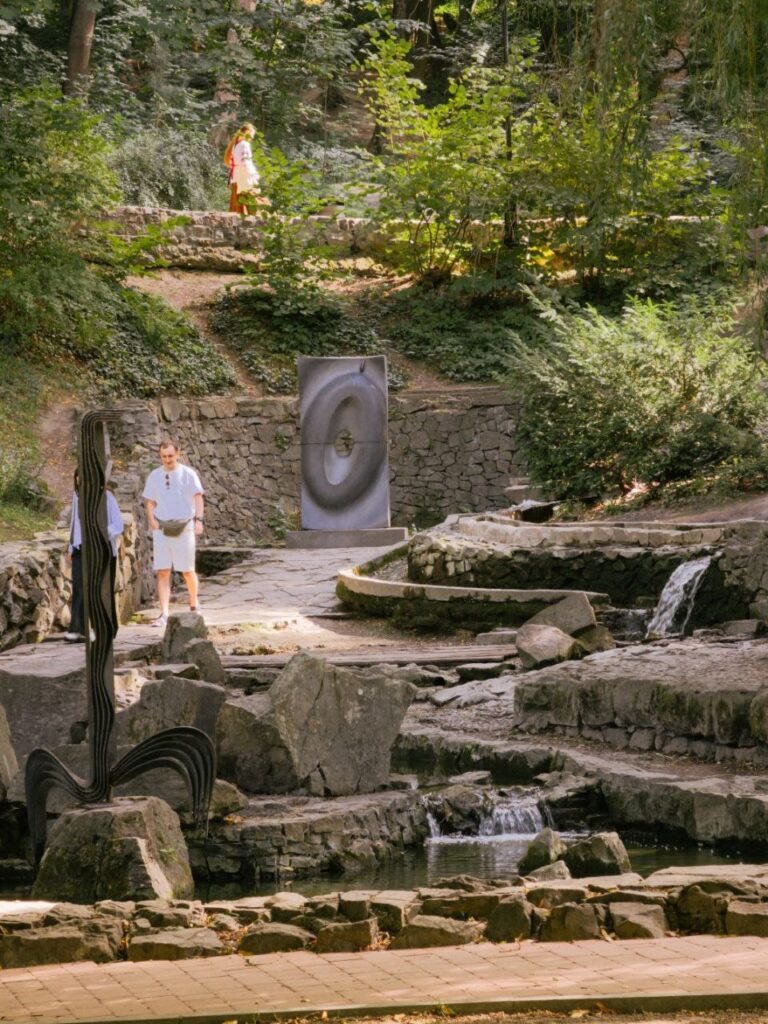
A stone cascade with small waterfalls.
How to Get to Stryiskyi Park
Parkova Street is a useful landmark for one of the main entrances. The area can be reached by public transport from different parts of Lviv, followed by a walk.
Check the current public transport route before travelling because routes can change. The park’s location is available on the official Lviv tourism website.
Practical Tips for Visiting
Wear comfortable shoes because the park has slopes and uneven sections.
Some paths can be slippery after rain.
If photography is important to you, allow extra time in autumn.
Check current information about temporary events and seasonal attractions before visiting.
If travelling with children, check the current information about the children’s railway before going.
Stryiskyi Park as Part of a Lviv Itinerary
Stryiskyi Park is an easy addition to a classic Lviv itinerary. After museums, churches and historic streets, it offers a change of pace and several hours surrounded by greenery.
If you are also planning trips outside the city, you can combine your stay with visits to historic castles. Our guide to Olesko Castle is a useful starting point.
Conclusion
Stryiskyi Park in Lviv combines landscape design, nature and city history. It is worth visiting not only for a walk but also to see a place closely connected with the major Regional Exhibition of 1894.
If you are staying in Lviv for several days, set aside at least a couple of hours for the park. For accommodation, explore Leo Apartment in Lviv.
Frequently Asked Questions About Stryiskyi Park
Where is Stryiskyi Park located?
It is in southern Lviv, between Stryiska Street, Ivana Franka Street, Samchuka Street and Kozelnytska Street. One well-known entrance is on Parkova Street.
How large is Stryiskyi Park?
The park covers more than 50 hectares.
When was Stryiskyi Park created?
The park developed in the second half of the 19th century. Work began in the 1870s, while Arnold Röhring’s planning and preparations for the 1894 exhibition were important stages.
What should you see in Stryiskyi Park?
The upper terrace, pond, landscape paths, Jan Kiliński monument and diverse vegetation.
How much time should you spend in the park?
For a basic walking route, around 1.5–2 hours is reasonable. Allow more time for photography and relaxation.
Is Stryiskyi Park worth visiting in autumn?
Yes. Autumn colours and the hilly landscape create attractive views. After rain, some paths can be slippery.
When travelers ask me where in Lviv they can experience medieval atmosphere, baroque grandeur, and peaceful monastic courtyards all at once, I... Read More
Znesinnia Park in Lviv: a complete hiking & history guide

 Author: Leo Apartment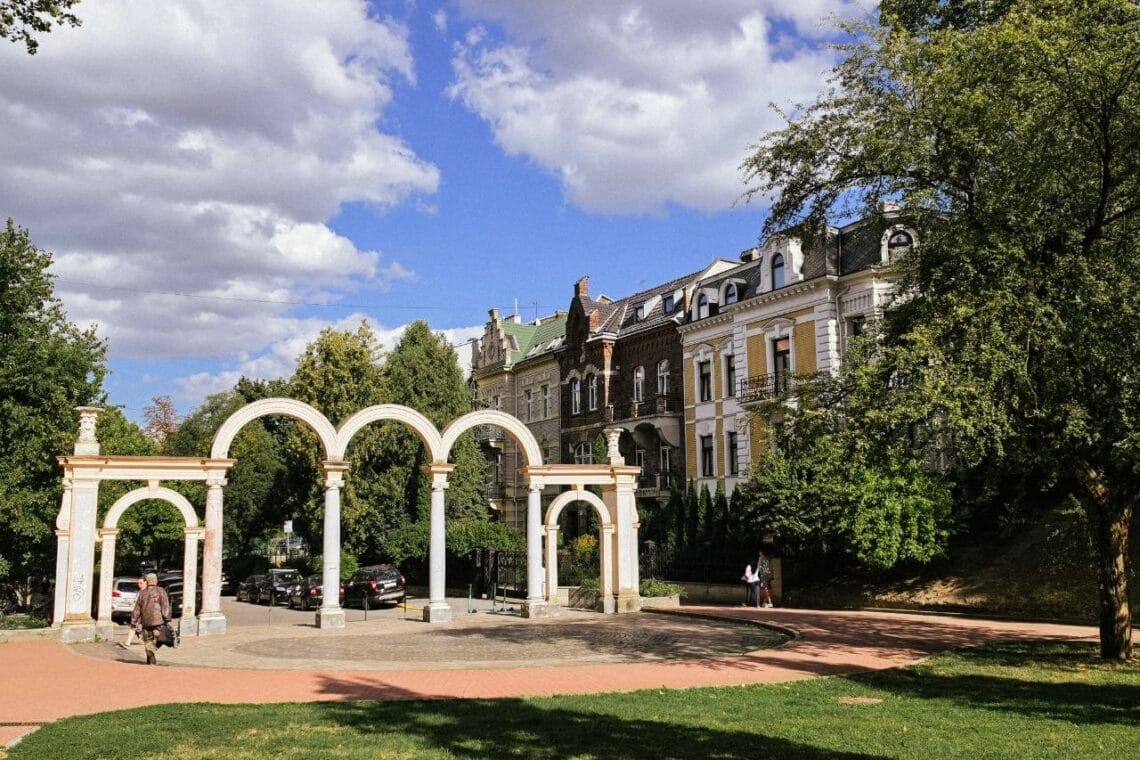








Join The Discussion