Potocki Palace in Lviv is the former town residence of Count Alfred Józef Potocki at 15 Kopernyka Street. The building, in the style of French classicism, was designed by the Parisian architect Louis Dauvergne. Today the palace houses a museum of the Lviv National Art Gallery with a collection of 14th–18th century European art, and its grounds hold a miniature park of castles and fortresses.
Where is Potocki Palace?
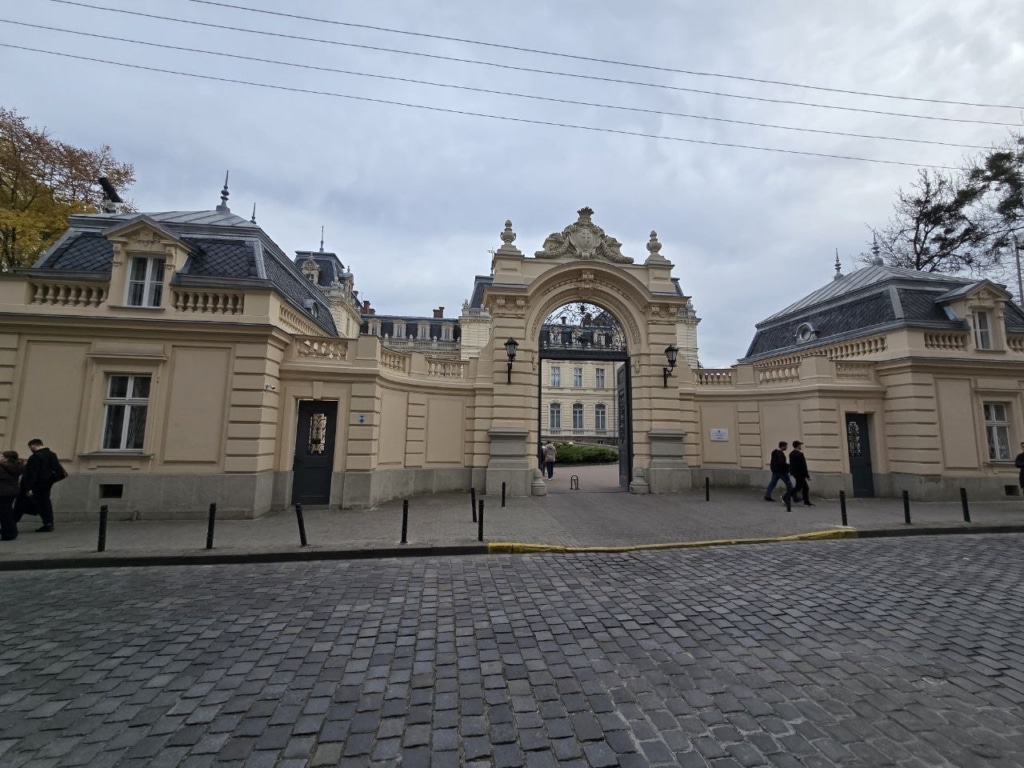
The palace stands in the centre of Lviv, at 15 Kopernyka Street, not far from Svobody Avenue and Ivan Franko Park. In front of it lies a main courtyard, separated from the street by a fence with a gate.
The palace gate from Kopernyka Street.
History of the palace
The palace was built for Count Alfred Józef Potocki, a politician and Marshal of the Galician Diet. According to the Lviv National Art Gallery, construction lasted from 1875 to 1883 (other sources give 1880–1889). The design was by the Parisian architect Louis Dauvergne and was adapted in Lviv by Juliusz Cybulski and Ludwik Baldwin-Ramułt.
After the Second World War, in 1945–1972, the palace was used by the Institute of Geology. In 1972 it became the city’s Palace of Ceremonies (the civil registry office), and in 1973–1974 the building was restored. In the early 2000s the palace was handed over to the Lviv Art Gallery.
Architecture
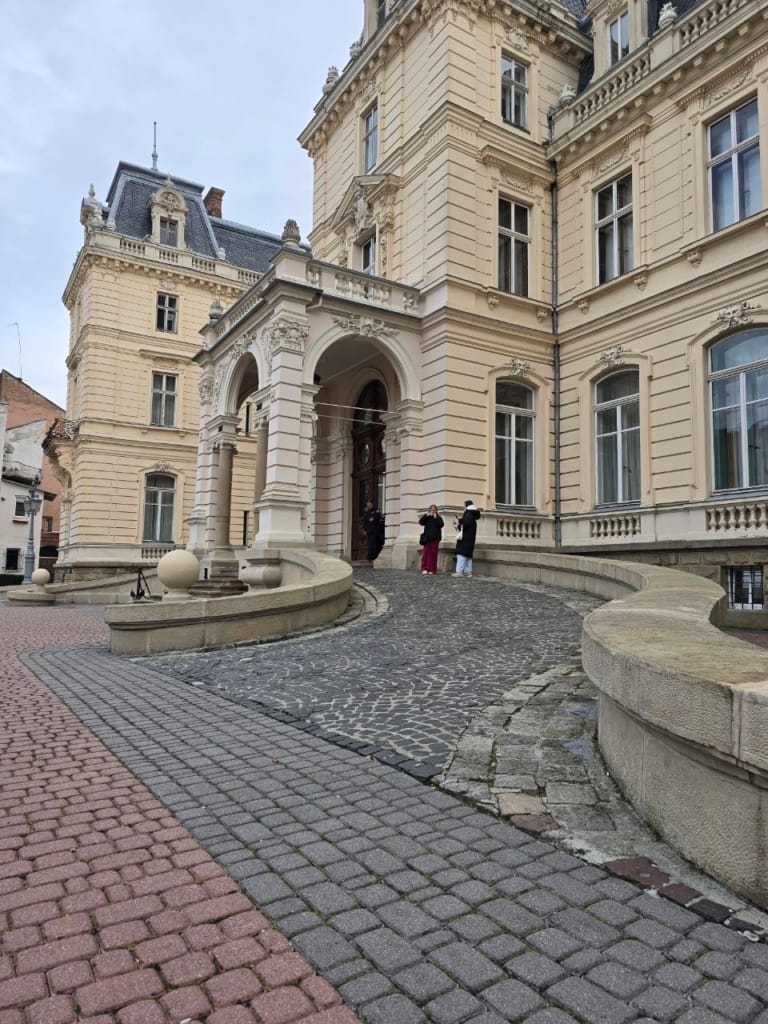
The palace was built in the style of French classicism with Baroque features of the Louis XIV era. The gallery describes it as an example of mature late 19th-century historicism. The symmetrical façade with tall mansard roofs faces a main courtyard with a round flower bed.
The main entrance with its portico.
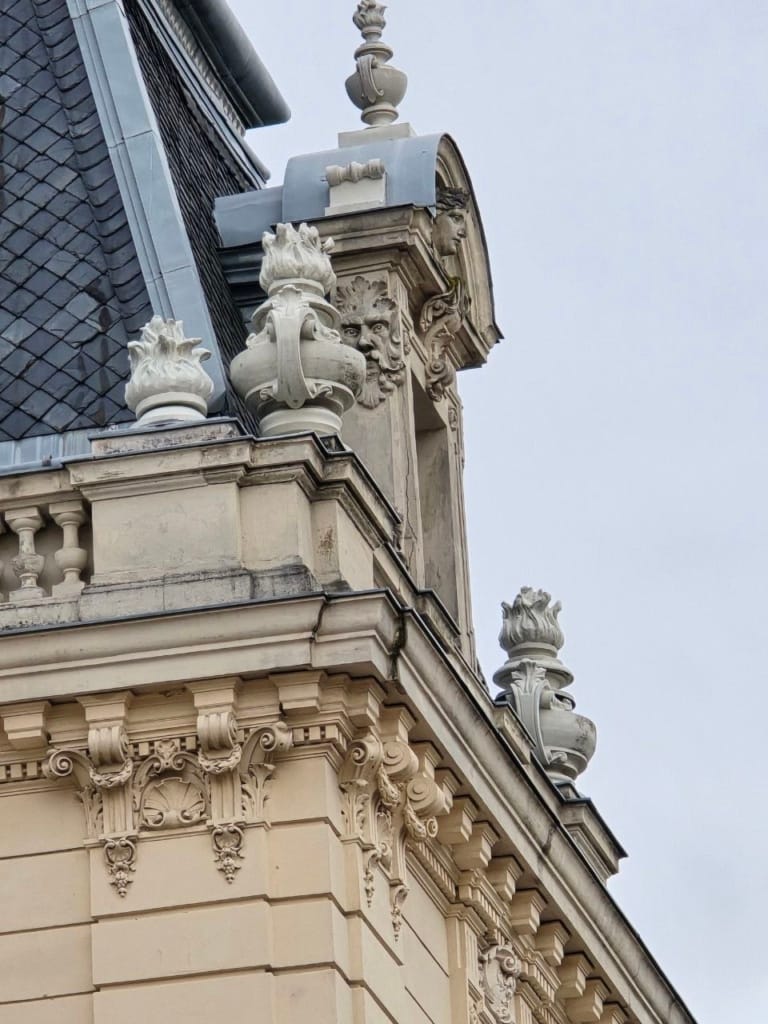
Take a closer look at the details: stone vases, cartouches and carving on the roofs and cornices.
Stone vases and carving on the palace roof.
The museum in Potocki Palace
The palace is one of the museums of the Lviv National Art Gallery. It displays a collection of European art from the 14th to the 18th century. The ground floor recreates interiors in the Louis XVI style, and the upper floor shows paintings by masters of various European schools. The gallery calls this collection one of the best in Eastern Europe.
Park of Castles and Fortifications of Ancient Ukraine
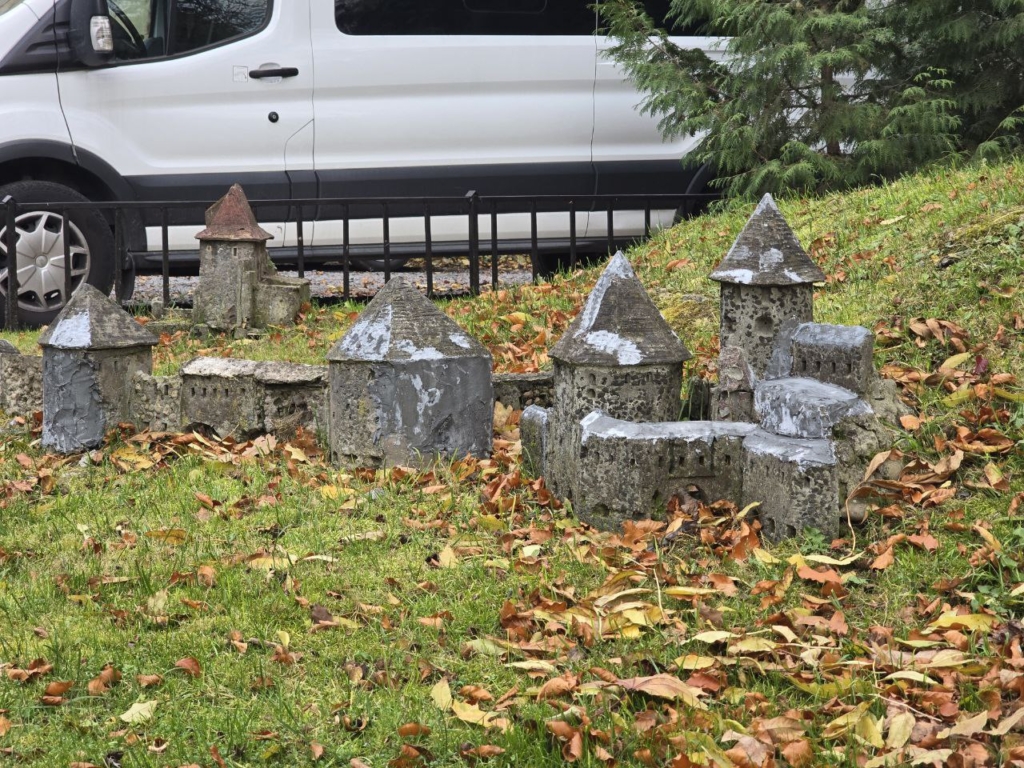
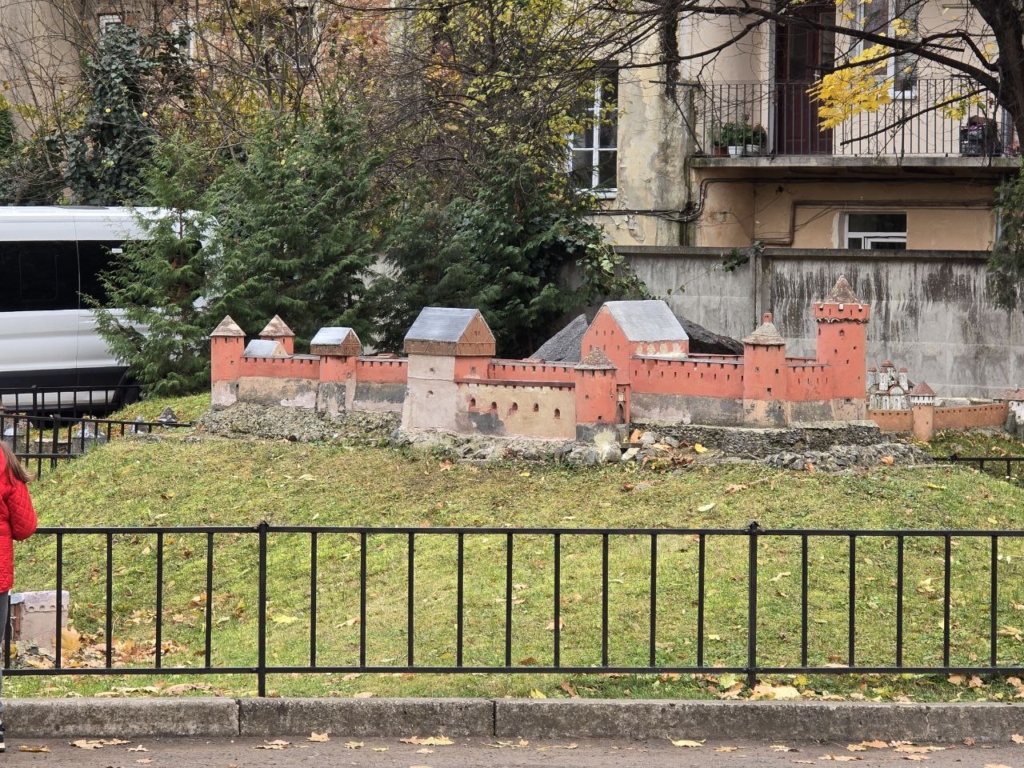
Since 2010 the palace grounds have held a miniature park, the “Park of Castles and Fortifications of Ancient Ukraine”. It features 18 concrete models at a scale of 1:50: strongholds of Galicia, Volhynia, Transcarpathia, Podillia, Budzhak, the Dnipro region and Tavria. Among the first exhibits were Lviv’s High Castle and Olesko Castle. Each model has a plaque with the years of construction and the location of the original.
Models in the Park of Castles and Fortifications.
According to travel websites, entry to the miniature park is free and it is open from March to October. Children especially enjoy it.
Do not plan your visit for Monday or Tuesday, when the museum is closed.
Arrive before 17:30, when the ticket office closes.
Allow 1–1.5 hours for the museum and another 20–30 minutes for the miniature park.
A family ticket is better value for families.
Combine the visit with a walk in Ivan Franko Park.
Frequently asked questions about Potocki Palace
Where is Potocki Palace in Lviv?
At 15 Kopernyka Street, in the centre of Lviv.
What are the opening hours of Potocki Palace?
Wednesday–Sunday, 10:00–18:00, ticket office until 17:30. Closed on Monday and Tuesday. Check the current schedule on the Lviv National Art Gallery website.
How much is a ticket to Potocki Palace?
Adults 200 UAH, students 150 UAH, children and pensioners 100 UAH (September 2026).
What can you see inside Potocki Palace?
Historic interiors on the ground floor and a collection of 14th–18th century European art on the upper floor.
Is the miniature park free?
According to travel websites, entry to the miniature park is free.
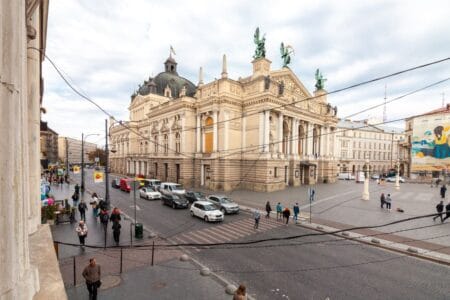
Lviv Opera House is one of the city's defining landmarks. Discover its history, architecture, interiors, the Parnassus curtain and practical visitor information. Read More
Stryiskyi Park in Lviv: History, Walking Route and Things to See

 Author: Leo Apartment





Join The Discussion